I was talking with a friend whose youngest had recently left for college. She told me that she walked into her daughter’s empty room and had a thought that surprised her.
Now what?
Not “What will she do?” or “Will she be okay?”
What happens to me now?
I haven’t experienced an empty nest myself, but I understood the question immediately. Because we all have roles that become so familiar we stop thinking of them as roles at all.
The parent everyone needs. The person with the career she’s spent decades building. The caregiver. The wife. The reliable friend. The one who organizes everything. The one everyone calls when something goes wrong.
We don’t wake up every morning thinking, Today I shall perform my role as Reliable Person. We just live it. And over time, what we do can become tangled up with who we believe we are.
That’s why it can be so disorienting when something changes.
I felt a version of this when Joe and I moved to California in 2018.
I’d spent most of my life in New Jersey, followed by five years in Chicago. I had relationships, routines, professional connections and places where people knew me. I knew how my life worked.
Then I moved across the country.
Suddenly, nobody at the grocery store knew me. I didn’t have my usual friends nearby. I wasn’t involved in the community. There were no familiar places where I walked in and felt like I belonged there.
It was exciting. It was also strange.
I remember wrestling with a question I hadn’t expected:
Who am I here?
Looking back, I think part of what made the move unsettling was that many of the things that had reflected my identity back to me were gone. I was still me, of course, but without all the familiar evidence.
I’ve seen versions of this happen for lots of reasons. A relationship ends. Someone retires. A caregiving responsibility that consumed years is suddenly over. A friendship changes. A career that once felt important doesn’t anymore.
Sometimes we’re grieving what ended. But sometimes we’re also trying to figure out who we are without it.
I’ve come to think there’s something valuable in not rushing to answer that question.
When a role changes, our first instinct can be to replace it. Find the next thing. Fill the space. Figure out the plan.
I’m someone who likes a plan, so sitting in the “I don’t know yet” stage is not exactly my recreational activity of choice.
But maybe the space itself has something to offer.
It gives us a chance to notice which parts of the old role were genuinely us and which belonged to a particular chapter. What do I want to carry forward? What am I relieved to leave behind? What am I curious about now that I have room to find out?
A changing role doesn’t necessarily require becoming a whole new person.
Sometimes it gives us a chance to get reacquainted with the person who was there all along.
And that may be a more interesting question than Now what?
Who am I now?
About the Author
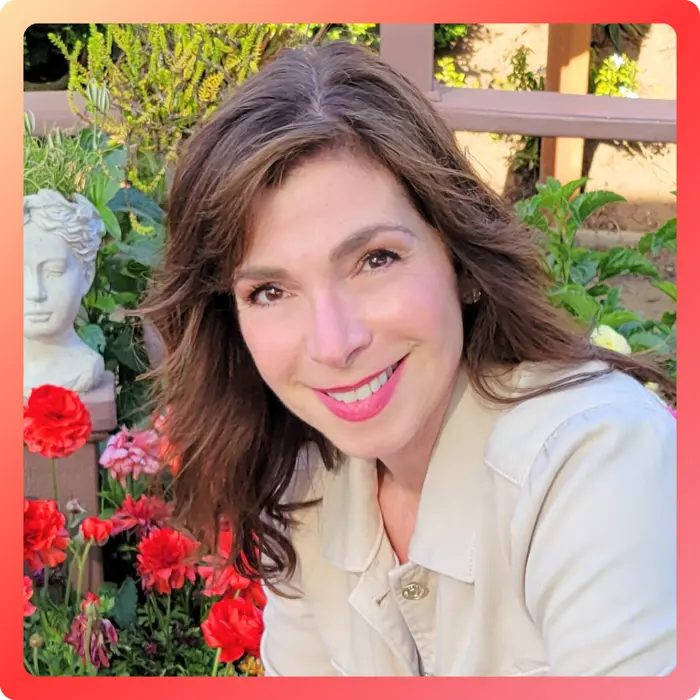
Cheryl Dillon, CPC | Founder of Funderful Experiences
Cheryl Dillon is a certified professional coach, writer, speaker and founder of Funderful Experiences. She holds a degree in psychology and has more than 16 years of coaching experience. Today, her work focuses on what helps people form, build and strengthen relationships.
She is also the creator of Connected Hearts, an in-person women’s community in North County San Diego, and The Uplift, her weekly email exploring friendship, marriage, communication, social dynamics and the relationships that shape our lives.
More Real Talk
Why Making People Feel Included Matters So Much to Me
Do You Think You Have to Earn Your Fun?